






















"The best doctor gives the least medicines."
— Benjamin Franklin:
was a Founding Father of the
United States
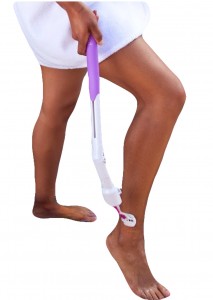
Giraffe Raiser Extension Handle
Bridging The Gap From Dependency To
Self-Sufficiency
In the evolution of the raiser with all of
its technological advances on getting a close shave; it has yet
to evolve in the design of the razor handle to include people
limited in flexibility and mobility. How can you get a close
shave if you cannot get close enough to shave?
There are millions of women each year who
are unable to shave their legs due to the discomfort of symptoms
associated with chronic medical condition or the post operative
phase of hip and knee replacement surgery and the third
trimester of pregnancy. All of these conditions decrease in
flexibility and mobility and therefore, make shaving it
difficult if not impossible with a short handled razor. As a
consequence, some women just “give up” on shaving their legs
entirely or resort to a caregiver or love one to carry out this
personal-care routine.
There is now an option for these women to
shave their legs independently with comfort and safety.
Introducing the Giraffe Raiser Extension Handle, a shaving
accessory designed to customize the length and angle of your
premium disposable or reusable razor.
The Giraffes Features:
·
No Slip Grip With Rubberized Finish – Perfect For Anyone
Who Has Arthritis
·
Adds 15 To 20 Inches In Length To A Razor Handle –
Eliminates Bending At The Waist
·
Quick Connect And Release Buttons – Ease Of Use
·
Pivoting Head Rotates To A 30°, 45° Or The 90° Angle –
Maximizes Flexibility
·
Two Universal Razor Attachments, Small, And Large –
Accommodates The Most Popular Men’s and Women’s Premium
Disposable And Reusable Razors On The Market Today
·
Wrist Lanyard – Conveniently Wear Around Your Wrist For
Easy Retrieval
The Giraffe’s Benefits Include:
·
Safety – Decreases The Risk Of Falling
·
Comfort – Maximizes Lower Back Strain
·
Privacy, Independence And Time Management
·
Broadens Options For Wearing Comfortable Clothing
·
Positive Self- Image
·
Improve Quality Of Life
The Giraffe
is easy to use: just lock in the raiser, adjust the length,
choose the desired angle, and you are ready to shave!
The giraffe
is also the ideal travel companion for shaving your legs in
small showers even for the most agile woman. Cruise ships, RVs,
college dormitories, fitness locker rooms and European hotels
are a few examples of where shaving with the Giraffe is
beneficial.
The Giraffe
Raiser Extension Handle is available for $29.99 on Amazon.com
and giraffe bath and body.com
Senior Discounts Can Add Up $$$
Hmmmm, Dunkin Donuts gives free coffee to people over 55. If
you're
paying for a cup every day, you might want to start getting it
for free.
Restaurants:
Applebee’s: 15% off with Golden Apple Card (60+)
Arby’s: 10% off (55+)
Ben & Jerry’s: 10% off (60+)
Bennigan’s: discount varies by location
Bob’s Big Boy: discount varies by location (60+)
Boston Market: 10% off (65+)
Burger King: 10% off (60+)
Captain D’s Seafood: discount varies on location (62+)
Chick-Fil-A: 10% off or free small drink or coffee (55+)
Chili’s: 10% off (55+)
CiCi’s Pizza: 10% off (60+)
Culver’s: 10% off (60+)
Denny’s: 10% off, 20% off for AARP members (55+)
Dunkin’ Donuts: 10% off or free coffee (55+)
Einstein’s Bagels: 10% off baker’s dozen of bagels (60+)
Fuddrucker’s: 10% off any senior platter (55+)
Gatti’s Pizza: 10% off (60+)
Golden Corral: 10% off (60+)
Hardee’s: $0.33 beverages everyday (65+)
IHOP: 10% off (55+)
Jack in the Box: up to 20% off (55+)
KFC: free small drink with any meal (55+)
Krispy Kreme: 10% off (50+)
Long John Silver’s: various discounts at participating locations
(55+)
McDonald’s: discounts on coffee everyday (55+)
Mrs. Fields: 10% off at participating locations (60+)
Shoney’s: 10% off
Sonic: 10% off or free beverage (60+)
Steak ‘n Shake: 10% off every Monday & Tuesday (50+)
Subway: 10% off (60+)
Sweet Tomatoes: 10% off (62+)
Taco Bell : 5% off; free beverages for seniors (65+)
TCBY: 10% off (55+)
Tea Room Cafe: 10% off (50+)
Village Inn: 10% off (60+)
Waffle House: 10% off every Monday (60+)
Wendy’s: 10% off (55+)
White Castle : 10% off (62+)
Retail And Apparel:
Banana Republic: 10% off (50+)
Bealls: 20% off first Tuesday of each month (50+)
Belk’s: 15% off first Tuesday of every month (55+)
Big Lots: 10% off
Bon-Ton Department Stores: 15% off on senior discount days (55+)
C.J. Banks: 10% off every Wednesday (60+)
Clarks : 10% off (62+)
Dress Barn: 10% off (55+)
Goodwill: 10% off one day a week (date varies by location)
Hallmark: 10% off one day a week (date varies by location)
Kmart: 20% off (50+)
Kohl’s: 15% off (60+)
Modell’s Sporting Goods: 10% off
Rite Aid: 10% off on Tuesdays & 10% off prescriptions
Ross Stores: 10% off every Tuesday (55+)
The Salvation Army Thrift Stores: up to 50% off (55+)
Stein Mart: 20% off red dot/clearance items first Monday of
every month
(55+)
Grocery:
Albertson’s: 10% off first Wednesday of each month (55+)
American Discount Stores: 10% off every Monday (50+)
Compare Foods Supermarket: 10% off every Wednesday (60+)
De Cicco Family Markets: 5% off every Wednesday (60+)
Food Lion: 6% off every Monday (60+)
Fry’s Supermarket: free Fry’s VIP Club Membership & 10% off
every
Monday (55+)
Great Value Food Store: 5% off every Tuesday (60+)
Gristedes Supermarket: 10% off every Tuesday (60+)
Harris Teeter: 5% off every Tuesday (60+)
Hy-Vee: 5% off one day a week (date varies by location)
Kroger: 10% off (date varies by location)
Morton Williams Supermarket: 5% off every Tuesday (60+)
The Plant Shed: 10% off every Tuesday (50+)
Publix: 5% off every Wednesday (55+)
Rogers Marketplace: 5% off every Thursday (60+)
Uncle Guiseppe’s Marketplace: 5% off (62+)
Travel:
Alaska Airlines: 10% off (65+)
Alamo : up to 25% off for AARP members
American Airlines: various discounts for 65 and up (call before
booking
for discount)
Amtrak: 15% off (62+)
Avis: up to 25% off for AARP members
Best Western: 10% off (55+)
Budget Rental Cars: 10% off; up to 20% off for AARP members
(50+)
Cambria Suites: 20%-30% off (60+)
Clarion: 20%-30% off (60+)
Comfort Inn: 20%-30% off (60+)
Comfort Suites: 20%-30% off (60+)
Continental Airlines: no initiation fee for Continental
Presidents Club
& special fares for select destinations
Dollar Rent-A-Car: 10% off (50+)
Econo Lodge: 20%-30% off (60+)
Enterprise Rent-A-Car: 5% off for AARP members
Greyhound: 5% off (62+)
Hampton Inns & Suites: 10% off when booked 72 hours in advance
Hertz: up to 25% off for AARP members
Holiday Inn: 10%-30% off depending on location (62+)
Hyatt Hotels: 25%-50% off (62+)
InterContinental Hotels Group: various discounts at all hotels
(65+)
Mainstay Suites: 10% off with Mature Traveler’s Discount (50+);
20%-30%
off (60+)
Marriott Hotels: 15% off (62+)
Motel 6: 10% off (60+)
Myrtle Beach Resort: 10% off (55+)
National Rent-A-Car: up to 30% off for AARP members
Quality Inn: 20%-30% off (60+)
Rodeway Inn: 20%-30% off (60+)
Sleep Inn: 20%-30% off (60+)
Southwest Airlines: various discounts for ages 65 and up (call
before
booking for discount)
Trailways Transportation System: various discounts for ages 50
and up
United Airlines: various discounts for ages 65 and up (call
before
booking for discount)
U.S. Airways: various discounts for ages 65 and up (call before
booking
for discount)
Activities And Entertainment:
AMC Theaters: up to 30% off (55+)
Bally Total Fitness: up to $100 off memberships (62+)
Busch Gardens Tampa : $3 off one-day tickets (50+)
Carmike Cinemas: 35% off (65+)
Cinemark/Century Theaters: up to 35% off
U.S. National Parks: $10 lifetime pass; 50% off additional
services
including camping (62+)
Regal Cinemas: 30% off
Ripley’s Believe it or Not: @ off one-day ticket (55+)
SeaWorld Orlando: $3 off one-day tickets (50+)
Cell Phone Discounts:
AT&T: Special Senior Nation 200 Plan $29.99/month (65+)
Jitterbug: $10/month cell phone service (50+)
Verizon Wireless: Verizon Nationwide 65 Plus Plan $29.99/month
(65+).
Miscellaneous:
Great Clips: $3 off hair cuts (60+)
Super Cuts: $2 off haircuts (60+)
Local
Families Advised to Monitor Seniors’ Health during
American Stroke Month
Leading senior care
provider urges loved ones to consider elevated risk of stroke
for older Americans
For families with aging loved ones, very few serious health risks present the same level of concern as an unexpected stroke. In the U.S., someone suffers a stroke every 40 seconds and more than 75 percent of these incidents occur in people over the age of 65. Fortunately, fewer than 20 percent of all strokes are fatal – but unfortunately, most stroke survivors suffer some lingering health effects that affect long-term quality of life.
May is American Stroke Month and across the area, Senior Helpers, a leading national and local in-home care provider that cares for stroke survivors every day, is spreading awareness about the prevalence of stroke among aging Americans. Although strokes can seemingly strike without warning, Senior Helpers is encouraging families to talk to their aging parents and grandparents about some simple lifestyle changes that can help reduce the risk.
“Stroke can sometimes be a scary topic that aging seniors don’t want to talk or even think about, but it’s important for concerned family members to realize that stroke is the leading cause of long-term disability in the United States, and the risks go up drastically with age,” said Peter Ross, CEO of Senior Helpers. “After a close family member suffers a stroke, there is a high likelihood that they will require a little bit more help and a little bit more attention to live their daily life.”
“Most stroke survivors still enjoy a very high quality of life, but most also require an extra pair of hands around the house to help out,” Ross added. “In situations where friends and family may not always be available, professional caregivers who are highly trained and know what warning signs to look out for can be there to help.”
Quick Facts about Stroke and Seniors:
-
Strokes are the sudden damage or loss of a section of brain cells caused by restricted flow of oxygen to the brain, usually due to hardened arteries or blood clots.
-
Stroke is the leading cause of disability and third leading cause of death across the country (Alliance for Aging Research)
-
Almost 800,000 Americans suffer a stroke every year, and more than 185,000 of these are recurrent attacks (U.S. Centers for Disease Control and Prevention).
-
Chances of having a stroke doubles each decade after turning 55 (Alliance for Aging Research).
-
75% of all strokes occur in seniors over the age of 65 (American Stroke Association).
-
90% of all stroke victims suffer lingering, long-term effects (University of Medicine and Dentistry in New Jersey)
The latest research from the American Stroke Association shows that women tend to be at slightly greater risk of suffering a fatal stroke than men. Also, seniors living in the Southeast are more at-risk than individuals in most other geographic regions. There are a number of factors that increase the risk of stroke, including age, family history, high blood pressure, smoking, alcohol and drug abuse, and any medical history involving previous episodes or symptoms of stroke. However, some basic and simple lifestyle changes can reduce the overall risk for millions of aging Americans.
Stroke Prevention Tips for Seniors:
-
Exercise regularly to reduce high blood pressure
-
Avoid high fat and cholesterol foods on a regular basis
-
For seniors with or at risk of diabetes, keep blood sugar levels under control
-
Reduce sodium in daily diet
-
Quit smoking immediately
Warning Signs of Stroke for Seniors:
-
Sudden numbness or weakness of the face, arms or legs, especially on one side of the body
-
Sudden confusion or trouble speaking and understanding
-
Sudden trouble seeing out of one eye
-
Sudden trouble walking or loss of balance
-
Sudden, severe headaches without cause
Always seek immediate medical attention, call 911 if you exhibit any signs of stroke. Recovery is greatly improved with treatment administered in the first 60 minutes after an incident.
About Senior Helpers: Senior Helpers connects professional caregivers with seniors who wish to live at home as opposed to a nursing or assisted living facility. The company has 300 franchises in 42 states and one in Canada offering a wide range of personal and companion care services to assist seniors living independently with a strong focus on quality of life for the client and peace of mind for their families. Senior Helpers strives to be the leading companion and personal care provider that offers dependable, consistent and affordable home care.
For more information, please visit www.seniorhelpers.com .
Local Job
Growth in Booming In-Home Senior
Care Industry
With the national
unemployment rate remaining stubbornly high at 9.7 percent and
more and more news of companies going under, where on earth can
you find a job in this town? Look no farther than your
aging parents and relatives, who are creating one of the biggest
economic booms this country has ever seen. In the
coming years, two out of ten people in the U.S. will be age 65
or older and there just aren’t enough people to take care of
them. That’s why care giving for the elderly is an exploding
sector of the growing local and national senior care industry.
This year alone, the in-home care industry is expected to grow
by 12.5 percent, adding more than 100,000 new jobs, many of them
right in our area.
“Senior care is a thriving industry with no sign of a slow down in sight,” says Peter Ross, CEO of Senior Helpers, the nation’s fastest growing provider of in-home senior care with offices locally and nationally. “We employ more than 6,000 caregivers nationally and we are hiring at most of our 283 locations. In-home care is recession-resistant, rewarding work that provides peace of mind for families who just can’t be with their senior loved ones all of the time.”
WHY LOCAL JOB GROWTH IN SENIOR CARE?
-
A recent study by the National Caregivers Association (NCA) shows that over the next 25 years as the Baby Boomers continue to age, the proportion of people needing care will increase while the number of adult children able to take care of them will decrease. Bottom line: There will be fewer American adults able to take care of aging parents!
-
More than 43 million people in the U.S. – 19 percent of adults – provide care for an elderly family member or friend.
-
The NCA reports the typical caregiver is a middle-aged daughter caring for an elderly parent or grandparent while juggling a family and a job simultaneously. Nearly 100 percent report emotional strain, most report financial strain and 68 percent miss work because of care giving responsibilities.
“The burden usually falls on one of the adult children who already juggles a family, a job and all the responsibilities that go with their own life,” says Ross. “More and more seniors want to stay in their own homes and professional caregivers can make this possible by taking the burden off of adult children.”
REWARDING WORK FOR AMERICANS – AN ECONOMIC BRIGHT SPOT Nichole Henry was out of work when she got the job as a Senior Helpers’ caregiver. She is studying to become a registered nurse (RN) and works helping elderly clients prepare meals, take their medication on time and simply listen when they want to talk. “I wanted a rewarding job and I’ve found my calling,” says Henry. “There is no job greater than helping others who can’t do for themselves. I listen to their concerns with an open heart and it makes all the difference in the world!”
About Senior Helpers: Senior Helpers connects professional caregivers with seniors who wish to live at home as opposed to a nursing or assisted living facility. The company has 283 franchises in 39 states and one in Canada offering a wide range of personal and companion care services to assist seniors living independently with a strong focus on quality of life for the client and peace of mind for their families. Senior Helpers strives to be the leading companion and personal care provider that offers dependable, consistent and affordable home care. For more information, please visit: http://www.seniorhelpers.com/
Quick Lesson in
Meditation
Meditation is said to be a great stress reducer.
The first significant studies, in the '60s and '70s, proved that
meditators could get themselves so deep into trances that they
wouldn't react when they were prodded and burned. Another study
showed that meditators, unlike marksmen, didn't flinch at the
sound of a gunshot. And a Harvard Medical School professor
studied 36 meditators and found that they used 17% less oxygen,
lowered their heart rates by three beats a minute, and increased
their theta brain waves -- the ones that appear right before
sleep -- without slipping into actual sleep. A later Harvard
test showed that the EEGs of meditators were significantly
different than those of a control group.
Later studies became more sophisticated with brain imaging. One
study showed that the brain doesn't shut off when it meditates
but rather blocks information from coming into a certain portion
of it -- the parietal lobe. Another study showed that meditation
slows blood flow to all portions of the brain but the limbic
system, which generates emotions and memories and regulates
heart rate, respiratory rate, and metabolism.
For 30 years, meditation research has told us that it works
beautifully as an antidote to stress," says Daniel Goleman,
author of "Destructive Emotions." "But what's exciting about the
new research is how meditation can train the mind and reshape
the brain." Tests using imaging techniques suggest that it can
actually reset the brain, changing the point at which a traffic
jam, for instance, sets the blood boiling.
Good news: You don't need a guru, weird clothes, or a monastery
to meditate. It's pretty simple:
1. Find a quiet place and turn out the lights.
2. Close your eyes.
3. Inhale slowly and deeply through your nose.
4. As you exhale (slowly), say a word or phrase that has a
soothing
sound.
5. Repeat.
Start with 10-minute sessions. If desired, increase gradually.
___________________________________________________________________________________________________
REDUCE YOUR CHOLESTEROL
Foods with soluble fiber are the best
foods for reducing your cholesterol because the fiber dissolves
in the blood stream and carries cholesterol out of the blood.
Foods with soluble fiber include vegetables such as carrots,
cauliflower, broccoli, onions. Just about every fruit and
vegetable is good a good source of cholesterol.
Be sure to eat the skins of both vegetables and fruits because they contain the most fiber. Recommended daily dietary fiber is 25 grams. Legumes, whole grains and nuts all supply soluble fiber. Barley has the greatest impact on cholesterol. And almonds are probably the most important nut. Unsalted and not roasted, almonds are high in monounsaturated fats such as those found in olive oil. Soy proteins are also great. You can use tofu in burgers, shakes or sauces. Ground cinnamon, too, is a powerful spice that can lower cholesterol. And flaxseed meal, also potent, can be added to a wide variety of foods.
Basically 50 percent of your cholesterol is determined by diet. Small changes in eating habits can make a big difference. Take little steps toward better heath and it will pay off in miles!